





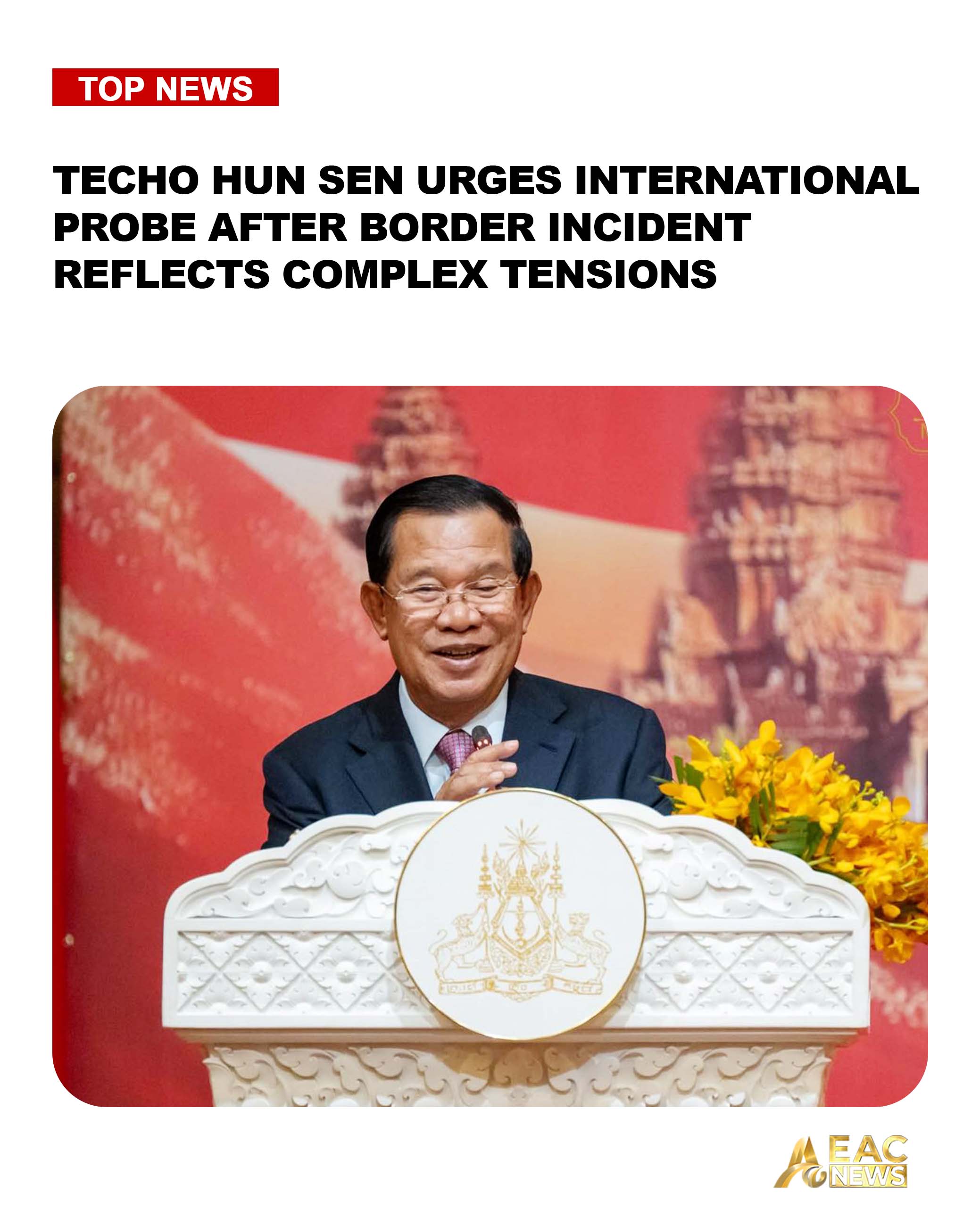








PHNOM PENH — The fragile calm along the Cambodia-Thailand border was shattered today by a sudden burst of violence, as mortar and machine gun fire erupted in what Cambodia's leaders describe as a clear ceasefire violation. The incident has cast a shadow over ongoing efforts to stabilize the region, prompting swift action from Cambodian authorities and a call for an impartial investigation.
Techo Hun Sen, Cambodia’s former Prime Minister and current Senate President, took to social media to recount the events and Cambodia’s response. “Today, a ceasefire violation occurred involving mortar and machine guns,” he wrote. “In the face of this, Prime Minister Hun Manet and I convened an emergency online meeting, instructing our armed forces to exercise restraint and refrain from retaliation.”
The gunfire eventually subsided, but the aftermath left both sides accusing each other of provoking the incident. Each government filed formal complaints with the Interim Observer Team (IOT), a collaborative ASEAN effort tasked with monitoring border stability. Cambodia, in particular, made an urgent appeal for the IOT to conduct an on-site investigation—an appeal aimed at uncovering the truth behind the incident.
Techo Hun Sen emphasized that for an investigation to be credible, it must be conducted with the utmost integrity, transparency, and neutrality. To this end, he revealed that Cambodia has proposed to the Malaysian-led IOT, which currently chair’s the monitoring effort, two critical forensic steps: first, ballistic forensic analysis to identify the type of ammunition used; and second, a site inspection to determine the origin and trajectory of the shells fired.
“Shell trajectories cannot be manipulated after impact,” Techo Hun Sen explained. “Inspecting the landing sites will reveal whether fire was directed from Cambodia towards Thailand or vice versa. It’s a scientific approach to resolving ambiguities that often exacerbate tensions.”
Cambodian forces are actively preserving shell craters and creating conditions for IOT observers to conduct their forensic analysis. The Cambodian leader expressed hope that Thailand would demonstrate the same level of cooperation, noting that resistance to inspections would imply guilt, much like “pure gold does not fear fire.”
He made a clear appeal to transparency, warning that refusal to allow independent investigations would be interpreted as an indication of guilt, further complicating efforts to restore stability. “Just as fire reveals gold’s purity, impartial inspections will reveal the truth,” Techo Hun Sen said.
As this tense episode unfolds, Cambodia remains committed to seeking a peaceful resolution through international mechanisms, emphasizing that cooperation and transparency are vital to ensuring long-term stability in the region. The incident serves as a stark reminder of the fragile nature of border peace and the importance of trust in international efforts to maintain regional security.